Tuesday, October 6, 2009

Chipotle Anti Candida Diet

REVIEW: Natalie Dessay - Mad Scenes


Exits in a couple of weeks (October 19 to be exact) the new album by one of the most popular contemporary artists, admired and criticized by some purists as is Natalie Dessay. The disc, from the classic title caption of "Mad Scenes", in reality it does not contain anything new that the fans Dessay's not already possess, because it assembles the scenes of "madness" that the French soprano has recorded throughout his career twenty years. Some would say so purely commercial transaction, and actually have reason to believe it. But when a disc, which it is manufactured or specially recorded compilation contains material of a certain artistic interest, from our point of view is still worthy of attention, however, a greater attention than fresh produce in the recording studio but stale content Music. That said, the disc has a fairly diverse musical excursion that starts Italian opera ideally be filtered through the French taste (Lucie), reviews the grand opera, and operetta, to close the circle by definition of the romantic melodrama Lucia (Italian version), which must be, wants to be the highlight of the disc.
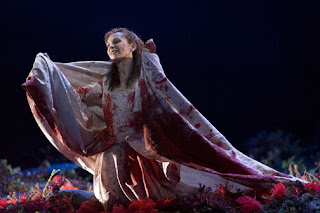
The two versions of Lucia, as well as self-satisfaction of the diva, is also the functional representation of the artistic career of this singer and offer interesting points of comparison rather than on purely musical level on the interpretation . The French version of this scene in fact differs little from the Italian (it is shorter and has the cabaletta transposed above) but the sensitivity with which Dessay deals with the two pages is very different. If the live Dessay Today's offers a Lucia - in Italian - and revolutionary "veristeggiante" (with the indignation of many, and the appreciation of many others), its French Lucie appeared more moderate and introspective, as if instead of looking at the character through Puccini looking through the Massenet. In the studio, this impression seems to subvert. The French version has a little more secure than vocalization Italian, but it has a richness of color and variety of phrases that denote a more interpretive work is related to the word and the psychology of the character is on a strictly technical. Someone will notice more of a "flaw" (not exactly precise coloratura, muted notes and spinning ad hoc treble the most dangerous etc..) but not a mortal sin, at least in our opinion, if an artist to come to terms with the "wrinkles" of his own voice even if he is an artist worthy of the name will be pushed to its limits by a more research of the color that, on balance, is the real discriminant of an interpretation; happened with Callas, Gencer, Scotto, the Sills, which we have forgiven all of a purely vocalist, is happening now with Dessay.


The long opening recitative, though well sung, has a few ideas to make a miracle, but in reality, appears to be functional to an escalation of tension will be resolved only with the E flat in the last final. Ardon incense in fact is already far more exciting, colored lights and shadows, and a burning passion but almost underground. Well as the apt choice to give up the flute at the cadence, the feeling is that Lucy, alone with his visions, wanders through the corridors of the castle, which echoed to his ravings. The central part leading to the famous cry cabaletta Instead, in place of a sung note that has caused so much scandal among philologists. It is of course the cry that Berco was heard at the Met, but it's a terrifying note unvoiced, less scenic, but definitely in effect outside in the dramatic plunge of the most chilling sound in a cacophonous dysphonia so unconventional. Spread of bitter tears there now appears as a direct result of this latent fear, and thus takes on a gloomy atmosphere and schizophrenic completely new, with changes of tempo and character even more pronounced. The Dessay's Lucia is a young wife who wallows in a bloodbath in the balance between consciousness and madness, so it is something strangely near the Devereux all'Elisabetta than to Bellini's Amina (or should I say close to Stuart, as in the recital Original Italian arias in which it appears that our scene unexpectedly Dessay gives a convincing interpretation and "humanizing" the character the ill-fated queen). A fascinating read that brings the two worlds Donizetti Sills as only he could possibly do, with different means and sensitivity.

A comparison of such tragic grandeur of the scene to be a bit disappointed I Puritani '. Point first because it is more uncomfortable with Dessay Bellini cantabile, uncomfortably Central and, above all, fluid and tied up, because the second point, perhaps having completed less than the character, not able to get out from the stereotype of a young girl betrayed and hurt that, for the love , loses his mind. The jewel in the Beloved becomes the cabaletta Vien, usually a bit '"throwaway" even by large singers who use it primarily as a piece of skill. Well, the mouth piece to Dessay, who still plays with the times and colors rather than with the coloratura, it becomes a real "love song" and acquires a dignity of expression that many interpreters, concentrated on the stairs and the triplets, relegated to the background . Same thing could be done to the air from Dinorah, this became a real workhorse of coloratura sopranos, who perform almost as an exercise for the concert. Dessay the other hand, in addition to reopen a beautiful cantabile middle usually omitted, impresses with its versatility rhythm (feel like playing with the pause) and coloristic virtuosity rather than the exterior, extraordinary here as well because the air is engraved in its heyday when the voice was still capable of an astonishing and unexpected A flat (yes, I said the flat!) overload. Through a shimmering light of the notes issued seems really Dinorah is playing with his shadow as he did Peter Pan, he lost in his world of carefree childhood. And so even the "old way" Mayerbeer able to approach the ideal of modern verve unleashed Bernstein's Candide, in an ideal bridge built around the Leibnizian philosophy of "living in the best of all possible worlds." Little to say about this piece, just one of the flagships of the French soprano. And the more that the voice capacity Dessay is memorable for the strictly actor, who also irrepressibly only audio through a spontaneous and surreal comedy that manages to beat many of the interpretations of history that they know they built. Dessay is where the charge is cocky, conceited, exaggerated, sings, talks, cries, screams like a caricature of an airhead diva, like a below Manon amphetamines, as well as proving a great singer-bred character, an expert in the use of voice not only in the sense of bel canto, but also theater. In addition to demonstrating that un'autoironia, let's face it, it is often foreign to many of his colleagues.
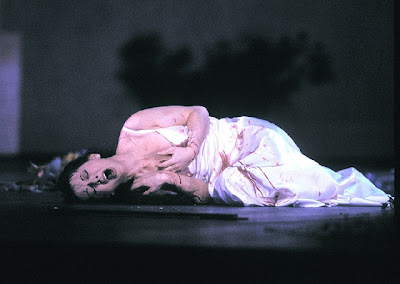

But the real miracle done with a page usually underestimated. Thomas's Hamlet is after all a work of craft and often very lengthy, the only page that really famous is, of course, the madness of Ophelia, which has become the workhorse of the time sopranos light facing the French repertoire. Already Callas, in her Mad Scenes of 50 years ago, had tried to restore dignity to this piece through a reading of less banal and blooms better care of the parties in accent singable. Callas At the time, however, was still missing the French taste, as well as the confidence of her character with a stranger who inevitably turns out to be more illegitimate son of Lucia that delivery of the pen of Shakespeare. A goal certainly huge for its time (and the same revolutionary) passed the reading breathtaking Dessay, who here can make the highest level in a directory where it is fully at ease. Open wide at the time gives a character suspended and dream at the same time allows the voice of Dessay to work on the smaller details of the expression as none had ever done in the past on this air. Just listen especially the airy and the initial stage of the "song", sad and already saturated with death as was the song of the willow for Desdemona in a hypothetical, but even so, the parallel between the two Shakespearean heroines. Amid the sudden explosions of virtuosity and tack sharp, almost tackled expressionistic, sometimes lacerating in their violence and now fully functional floor drama. But if Lucy became insane murderer, Desdemona became a victim of the folly of others, Ophelia is a victim and perpetrator of herself, the archetypal suicide madness that is perpetuated through a form of ritual self-injury that, beyond the theatrical metaphor, it is still relevant if considered on a purely psychological. And the cry of "I die for you" Ophelia sacrifices his soul in an irrational but dramatically conscious sacrifice that Dessay expresses in a profound and moving through an interpretation of modernity felt overwhelming.

Zizzu


Natalie Dessay - Mad Scenes: Scenes of madness
(Virgin Classics - 2009)

DONIZETTI: Lucie de Lammermoor (Lucia)
BELLINI: I Puritani (Elvira )
THOMAS: Hamlet (Ophelia)
BERNSTEIN: Candide (Cunegonde)
MEYERBEER: Forgiveness Ploërmel (Dinorah)
DONIZETTI: Lucia di Lammermoor (Lucia)


Sunday, October 4, 2009

Answering Message Sample

CRITICAL RECORDINGS: Bellini and his leading ladies (Part 2) EXCLUSIVE


the Capulets and the Montagues: the prima donna contralto

I Capuleti ei Montecchi by Bellini is the first "Directory" . In the late 50 is Giulietta Simionato, in-en travesti role of Romeo, to act as a pioneer in the revival of this work (there are two live recordings from a witness). Simionato is a true forerunner of the return of the bel canto contralto, perhaps the first in modern times that he took, probably without historical and aesthetic references in the immediate past nor a specially prepared "bel canto" in this kind of repertoire often emerge winner thanks to his talent is purely vocal (his undeniable technical climbing) and interpretation (think also of his barber, still singing bravely when the work was in hand the sopranos light). We speak then of altos, since he is Romeo's character to this point, somehow the true "first lady", as well as the only authentic part for alto player written by Bellini. As evidence of this should be noted that the party was headed by Judith Grisi, sister of the soprano contralto Julia, and even more important is the fact that the greatest contralto of the time, Malibran, made one of his warhorses.

The work order then to disappear from billboards to the 800 and unless the aforementioned pioneering revivals of the Second World War, will reappear in Italian theaters until 1967 at La Scala. Stellar cast, Abbado on the podium, Juliet is Renata Scotto, Giacomo Aragall Romeo, Tybalt is Luciano Pavarotti. Abbado, however, that both philological was with Ross, there will be tougher on this score, with alterations, mainly cuts and transpositions terrible tone appropriate to adjust the part of Romeo, said he was normally assigned to a contralto, tenor, in a sort of (disrespectful) version modern work that would like the male role entrusted to a man's voice. Fascinating results in terms of drama but definitely open to criticism because, in addition to betraying the score of Bellini, completely subverts the balance between the characters making Juliet, originally supporting actor "pathetic" by writing much less in evidence, the only "false" first lady (as in if the star became INTED Adalgisa in Norma). Version, what is worse, it became good for a decade "tradition." Ricciarelli, for example, another famous Juliet, has to his credit a live officer of the Phoenix 1991, now definitely on the ropes, and a record of 1973, again to Phoenix, here in the state of grace, it is used with the standard version instead of the alto (Lucchetti in this case).

The studio version, and the reference is therefore that of 1975 with the ferratissima Janet Baker in the role of Romeo and Juliet by Beverly Sills beautiful, no longer in their prime years with the voice but yet eloquent. Not then what is known as a model of "Italian hand", but what is interesting just because the caliber of the artists and the fact that virtually leaves the podium Patanè, for the first time, the score intact, make this recording a disk reference. For those wishing to live there is also an officer of the same year with the Sills and the great Tatiana Troyanos, in her repertoire certainly not congenial, but in the grand manner in which it appears. When it comes to bel canto, one can not mention Marilyn Horne finally, another big player in the history of this title as many others. After that nothing relevant other than the reading of 84 that Riccardo Muti, who knows why, did not have the courage (or opportunity) to influence the work in the studio ... there remains an official live with the couple Baltsa, Gruberova, Baltsa with a little 'too' bolsa "(if you grant me the pun) and decidedly uncomfortable, as well as a very martial Muti usual direction. Leaving out the two studio recordings of the end of 1990, it turns out in 2008 the magnificent recording with the Vienna Sinphoniker directed by Luis in the field that sees the two superbellissime contemporary opera: Anna Netrebko and Elina Garanca. The incision has a beautiful sound I must say, and the stars also have vocally if you like, but seems to lack a certain truth to this album, ennessimo mainstream product for 2 rising stars of opera-starsystem. Garanca better to be honest, even if it lacks the aggressive look and the accent right in the footsteps of agility. What about the Netrebko? shows off her nice uniform stamp a bit 'too monotonous, yarn here and there, but never quite the character sketches, which is even flatter than it already is. A hard but not despicable enough so inert, in the long, tedious.

DISCOGRAPHY SUGGESTED

Capulets and Montagues - Simionato, Hurley, Cassily, Gamson (LIVE 1958)
PRO: live historic Simionato
AGAINST: rest of the cast, cuts, live sound

Capulets and Montagues - Baker, Sills, Gedda, Patanè (STUDIO 1975)
PRO full, the stars
AGAINST: Jeddah a bit 'hazy


Saturday, September 19, 2009

Printable Welcome Greetings For Churches

: Interview with Maria Dragoni


Next to the celebrations of its "first" 25 years of glorious career, we at the Voice Here we interviewed in exclusively to the great soprano Maria Dragoni:

Award Maria Callas was one of your first big artistic statements recognized. Giulietta Simionato, mezzo-soprano and great friend of Callas, said on that occasion that you embody what had been the art, the voice and the spirit of Mary. A memory of that moment.

Victory Award Callas, Simionato with the statements, I am shocked, most 'that emotion. The same thing occurred in the contest Bellini in 1981, the president of the jury was Souliotis. Even then there was talk of my striking resemblance to the Divine: I was only 22 years old and sang Casta Diva, directed by Ottavio Ziino. There was then set up a prize pool for me, more 'important Bellini of the same prize (worth more' in economic terms). So I was awarded the "Special Award Maria Callas."
Actually it all started a few years before the first test I did in a conservatory 17 years, where I sang Micaela. With the peremptory cast with which the phrase "here smugglers ..." I revealed the authority of my way to expose the recitative, so listening room a German wanted to sign me up for a movie at the cinema standard. I bought even the score, but I was a minor and the teacher forbade me to do so; sin, there is now a feature film of my norm just 17 years. The role of my destiny, in fact the greatest regret I have is not being able to affect standard with Karajan even though I had already signed the contract with Oldani father, since the master died the same year.


You made mention of Norma, a role that is very difficult as everybody knows, and you brought on stage many times during these years ... as well as other roles such as Bellini Sonnambula and Pirate, just as challenging ...

Norma is a difficult role for those who do not have the right voice for me it is not, nor are the works listed above. Instead, it is difficult to find a manager capable of directing it (only it is up to Muti), but the really bad thing is you do not know how to set up this work: I've only seen the royal ugly, except to Zeffirelli Callas, which unfortunately does not we have a full video (A real crime!).

You mentioned voice ... Undoubtedly, your distinctive voice can be described as "dramatic agility." Often the roles of Bellini and Verdi became the first footage of choice of opera singers with vocal abilities that have developed or dramatic sopranos of pure drama but could not resolve the steps or blooming of agility in a satisfactory manner. Why is it so difficult today to find a dramatic soprano voice of agility?

To be a dramatic agility necessary to have a basic dramatic voice, then the will to study just to be able to agility to perform roles, which include dramatic entries were written for, and that only later became the prerogative of the lyric-light (which today, again, you even dare to perform standard or Pirate. A real mess).
E 'in this sense that they are considered the only true heir of Maria Callas, because I followed his line, dramatic voice as I studied her, no genuine dramatic soprano did it, plus you have to start very soon . I hope in future there is some dramatic soprano with the same determination of Callas and mine for now we are two isolated cases.

Your footage is actually very broad and not limited the only music of the first 800 but ranging from Mozart to Puccini. What are the four characters that best represent your personality?

My repertoire ranges just because I loved the nature of a long study.
Needless to say, between the characters to suit me the four main protagonists are the works of Norma, Turandot, Nabucco and Macbeth. In practice the 4
warhorses Gina Cigna. Just as she pointed to his heir, even if my technique has allowed me to tackle tough roles even as Lucia, Amina, Puritans, etc..

Greatest dramatic soprano of the First World War with whom, remember, you also have studied the Turandot ... Continuing the discussion of singers of the past, what are the names of the past (but also the present) that you appreciate most?

love Caruso, the Ponselle Schaliapin, Callas and Di Stefano, Simionato then.
Today? I appreciate the intelligent way to make art of Dessì, Desiree Rancatore the good in his repertoire, then the voice of the giant river Nicola Alaimo, Simone Alaimo (uncle) and his way of being an artist that has always characterized as welcome in some work style and Frittoli Antonacci ... sorry, but I can not think of anything else now.

The opera world, as we talked about and gentlemen, is said to be full of envy and hypocrisy. The relationship between colleagues, whether singers or directors, is not always easy or are there cases where you create friction between you?

of envy or hypocrisy I've never cared for, even if I did there. I've never had friction with colleagues, whom I admire all, in the meantime as they are, then as a hand, are generally happy and honored to sing with me, and this allows me and make them better.

And with the directors? I read in your resume that you worked with Mehta, Abbado, Muti, Giulini, Oren, the Maazel ... most prestigious chopsticks. Which of them you've found the most artistically and humanly comfortable?

Muti goes without saying that only gave me the greatest consideration: just settled at La Scala debut in 1986 made me, then came often to listen to me, invited me to his home in Ravenna, I was always treated as a person home, as did his wife and his beautiful daughter Chiara, a great actress. Muti for me is the most 'big, the other a back seat, everyone, including Giulini, but in the end I was fine with everyone. One of my strong point has always been very musical, since the time of the conservatory (where I graduated in the case with 10 in solfege).

back at your role, your career also saw the premieres: moment of great historical significance besides modern art was the resumption of you entrusted dell'Ines de Castro of the Persians, musical-cultural operation drew more than 50 critics from around the world. How did you feel in taking part as leading to this event?

Ines de Castro gave me the opportunity, as he wrote Gualerzi, to introduce the X-ray structure of Malibran's voice in a work that was written by an author less, but just for that reason, but I still very attractive music descriptive of the Persians in this work. Mioli wrote in the journal L'Opera, "Eroica, the Dragons, after much research we finally did understand what was the song of the century who has shown skill to know all the rules of style." So they expressed various critics in the world, defining the only one who could revive this work. Air simpler then, "Dear day," was recorded by Bartoli in a CD dedicated to Malibran.

In this regard, recently many singers are part of the star system without opera, for us, the real requirements of the artist. What do you think? Have you ever been the victim of the dynamic business which has long been subject the world of opera?

Already the word star system has nothing to do with the music, which is an ancient art, and the great Uto Ughi has amply demonstrated, it is a system that has failed in full and now presents its last vestiges. Some experiences I had signed a contract to record with Muti Il Trovatore and I was already in London. Those of EMI were excited about me, then came the tenor and wipe the CD, said, "is coming out of the Troubadour with Decca Pavarotti and Banaudo, and content can not compete with Pavarotti." My career is littered with episodes similar.

How well have suffered the gross injustice of the American superpower. So it was for, and Norma Vestal, the press announced, "is the year of the dragoons, which will open two theaters with Muti (La Scala and Ravenna) with two important works: and Norma Vestal," then at La Scala, after a month of tests Cavani, came from a U.S. tax-star system, which was then flooded with whistles and panned by critics. I do not sing ever again ', but in the end, though when I sang I had the audience into a frenzy and the press important to me Please Emi on the DVD is the U.S., both with the media today simulate applause and eliminate the whistles is a breeze. Even in Taormina, I had to sing Norma in the world vision 23 and in the end I climbed over June Anderson, 10 years older 'than me and he has never believed in Norma (when I, at age 25, I sang 115 performances well in that role).


From your early days have gone another 25 years, made an enviable career in large theaters and in an important repertoire. I still feel he had done all you could and you wanted? artistic challenge that you'd be happy to collect today?

After 25 years today, besides the voice I had and I still have now, I have the experience and greater security, as always, we'll see what I will be asked, I do not like routine I do not sign long-term contracts, especially now that things change constantly.

What advice would you give to a young man who is about to embark on a road in your world, that of opera singer in the opera house.

not do the same for all theoretical advice, with regard to each item is a special case. For the rest of the board to study and not get distracted, to be when you study singing only passion. As long as you are in game you have to be serious and ethical, but I'm sure that my words are in the wind.

About passions ... Who is Mary out of the theater? and passions has over the work?

Maria out of the theater is a normal person and very simple, generous ... sometimes a bit 'too much.
Passions are always art, painting, sculpture, aesthetics and love nature, especially the sea. Having sung in over 120 cities around the world have traveled so far, and travel remains one of my greatest passion.

To close, your future professional engagements ...

Things sure are a concert of music by Pergolesi in Naples ... then other things, as an option, like the debut Attila ... but we are in September and will reach many other jobs, as always.

Dear Mary, thank you for your time with those who will be pleased to read this conversation.

is I who thank you for the intelligent questions.
I greet you with great esteem and affection, Maria Dragoni

(interview by Didier and Zizzu)