Wednesday, October 21, 2009

Koleston Perfect Shade Chart

REVIEW: Renée Fleming - Verismo


It seemed only right to say a few words sull'ennesimo recital in a study of the stars over "dive" in the last two decades, the American Renee Fleming. The Fleming, although it has a soothing and mellow lyrical voice with that "little can be done" (as one would think), was launched in artistic challenges often noisy, sometimes taking off more than you can chew, sometimes hitting the mark in spite of dettrattori. What matters is that Fleming, in addition to being one of the last great divastre of our day, with all the pros and cons that this role brings with it, is a character who dares First of all artistic and all, regardless of the outcome, can not but arouse our curiosity and admiration by. After beating several territories, even seemingly far away from his abilities (his memorable Alcina, striking her Armida, to name two glaring), the Fleming seeks new horizons in the Italian verismo (very broadly indeed), with a recital all dedicated to Italian authors post-Verdi. An area in which, pressed it, the singer is starting not just uncomfortable. In truth, Fleming had already ventured in the preceding recital, in the pages of the most famous Puccini, Cilea, Catalani, Leoncavallo and so on. with satisfactory results in some cases and a bit 'less in others. This disc is implicitly promises to complete the picture. Commendable then, from a certain point of view, the absence of all tracks previously incised, mostly known to all pages, which allowed, except for a couple of songs much footage, to dig and find pages that would normally be difficult to hear in a CD of arias. An opportunity then to re-evaluate and rediscover a certain repertoire, Puccini removed the titles and a few other exceptions, it is often overlooked and, rightly or wrongly as the case, underestimated.

We arrive at the performance itself. The Fleming as has been said already appears uncomfortable and for various reasons. The first is purely voice: his book is not suited to roles as "driven" and struggles to stand up naturally warps so dense orchestral. She 's the first to admit it in the promotional video of the album, where he speaks of as Tosca and Butterfly roles off-limits to his voice. To stay on Puccini's other roles, however, appear to be unrelated, is a problem for the projection of the phrase in the lyrical moments, and for a little accent declaimed passages, albeit ill suited to a timbre, as well as psychological distance. The air from La Rondine works quite and light weight (like the concert at the end of the disc), less good is his Manon - photo - (Sola lost abandoned presented in a new version that combines the promotional functional purpose, since the air seems to have a different instrument that suits the singer's vocal quality), which seems to lack the urgency and drama of an accent and burning desperate. Even less well then the pieces are from La Boheme and Suor Angelica, pages in which Fleming is not convincing and does not bring anything new except a decent performance and a nice tone. The pure and poignant character is probably too far away from her for psychological sensitivity to vocal color, and the result is obvious. The Puccini piece where Fleming has something to say is really the last air Liu, needless to say, with realism in the strict sense has nothing to do anything now. Liu Fleming is not a story of Mimi, a character is crystallized in his pain, his resignation is a bit 'the archetype of suffering for the sake of cancellation brought to extreme conditions of life itself, a carnalissima "anti-Turandot" that, instead of defense against otherworldly feelings rising to a degree, take the path of total abandonment and aware. The color of the Fleming voice, especially in the airy initial suffering is often transformed into a surreal but vibrant, where a fabulous Renée wallows nicely. Writing then is now different from Butterfly and co. and from this it takes advantage of the Fleming. Without this exception Puccini is his frankly forgettable as well, more or less for the same reasons, its Mascagni (a bit 'better Lodoletta Iris, for reasons purely weather).
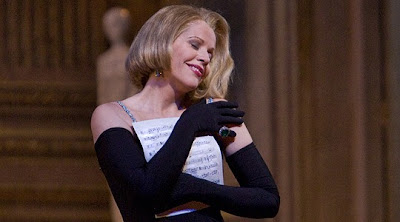
With Leoncavallo, however, things are decidedly better. In the past, the Fleming had often sung live (and recorded) the air of birds from "I Pagliacci", technically difficult piece in which he had been shown to handle it because, in addition to a technical ferratissima, a part of the liquidity inherent with this song that went to a wedding. Mimi is now deeply involved in leoncavalliana, more frivolous character of otherness Puccini-ego, a sort of synthesis of Mimi and Musetta opera composer of Lucca, a character in the role of which may still not brilliant, but at least is more credible. The real surprise is the ten-minute scene from Zaza, that it does not hide Fleming to be his favorite song on this record and, ultimately, the main dish. The scene is very suggestive, Zaza, a soubrette of café-concert, he discovers that his lover is married with a daughter, and finds out just knowing and talking with the child (in the work - actually an operetta - a role starred). It 'actually the key scene of all the drama, which focuses on a character by the complex psychology, poised between the torments of star-like Tosca (singer she too, though of a different class), the internalized pain of Cio Cio San (she also betrayed by a man already married), and especially embodiment of the dichotomy between artistic life and private life in itself already eviscerated by Leoncavallo Pagliacci. A character that Fleming can do to express his and with a loving lick hours, now nervous, now full of pain and underlying sensuality of a corrupt, fallen, expression of feelings as devastating as ever explicit. A character that could probably also do well theatrically. How not to underestimate the relationship between Fleming and music by Cilea, composer more "crop" and less than exteriorizing Puccini and Mascagni, the elegant and lyrical writing that is more suited to the American singer. If you have other disks in the same dall'Adriana had been some interest, even the air by a confirmation of the posive Gloria, where the melodic line can be soft and dynamics valuable. Glissando quickly on the page Catalani, of little musical interest / interpretation (Well I will go away because it lacks the appeal has already been registered in the past) as well as outside the context of historical and cultural that would animate the disc. Just as important is the little piece of Zandonai by Conchita, Carmen sort of proto-decadent sauce in which Fleming seems not to recognize.
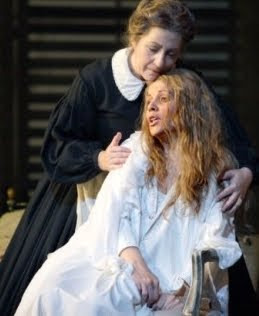
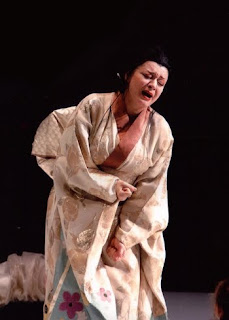
last surprise of this disc so much of the tunes are alternately Jordan. On paper it would be hard pressed to associate the music of Renée Fleming Jordan, and probably beyond the American singer of these songs would not be able to be so effective in the interpretation of a complete work, again because of a voice and a sensitivity to her foreign . But Fleming, at least in these extracts, hits the mark. To begin with results amazing retrieves a page as beautiful as from Siberia, from the dreamy lyricism and suspended (in which the singer gives a display of remarkable velvety mezzevoci), full of fascinating slave that refer in some way to areas more familiar to American soprano (see above Onegin and Rusalka). Then re-read key neo-romantic in the final scene of Fedora, more heroin wrapped in the chill of the East. A page that has historically been the subject of the grossest degradation of the realist style in derogatory sense (sobbing, recited, screamed, gasped and almost never sung), and here is given to an intimate and fragile compound that can be met within the infinitely more credible in expressing the loss of a life that goes off in the bitter cold of remorse. The part is entirely sung, in a faint voice, with a faded color and sound that wobbly, like a candle in the wind in which burns yet the last memory of a sensuality and a passion devoid of any force and the vain, however, a reading that makes a kind of new to Fedora Violetta - photo - closing the circle of "realism" in the history of opera. Final Judgement: a whole disc with many ups and downs and not fully convincing, certainly not the best recital of the American soprano. A disc that can be appreciated, however, want to rediscover some pages out of footage, you want to hit some readings that add other small pieces to the mosaic art of Renée Fleming, who for better or for worse is still able to find inspiration for her stimulating opening same as an artist and for those of us who listens and continues to admire the will to experiment and try to speak, with music, something new.

Renée Fleming - Verismo
(Decca 2009)

1) Puccini - "No Mamma" from Suor Angelica
2) Mascagni - "A little girl was in" from
Iris
3) Puccini - "sweet and divine Hours" from La Rondine
with Kaoru Saito, Lucia Mencaroni, Barbara Vignudelli
4) Mascagni - "Ah, his name Flammen forgive me ..." from
Lodoletta
5) Catalani - "It never, therefore, I will have peace ... Alas!" From La Wally

6) Puccini - "It My name is Mimi from La Bohème

7) Leoncavallo - "Musette flips on Vocca alive" from La Bohème

8) Leoncavallo - "Mimi Pinson biondinetta the" from La Bohème
Cautoruccio with Paul, Mark Calabrese, Kaoru Saito, Annalisa Dessi, Carlos Gomez, Gilles Armani and Choir
9) Puccini - "Addio ... Donde pleased" from La Bohème
with Arturo Chacón-Cruz
10) Leoncavallo - "Angel, your name?" From
Zaza Emma with Latis
11) Puccini - "Sola lost Abandonia" from Manon Lescaut

12) Zandonai - "Yesterday's Factory" from
Conchita
13) Chile - "O my cun Bloom "from
Gloria
14) Jordan -" All set "from
Fedora with Arturo Chacón-Cruz and Emma Latis
15) Puccini - "You who gel boundary" from Turandot
with Arturo Chacón-Cruz, Marco Calabrese, Barbara Vignudelli, Choir
16 ) Jordan - "In the know love" from Siberia

17) Puccini - "I drink your fresh smile" from La Rondine
with Jonas Kaufmann, Barbara Vignudelli, Paul Cauteruccio and Choir


Saturday, October 17, 2009

Pvr Count Towards Ratings?

EXCLUSIVE: Interview Daniela Dessì


In view of its European debut in Zeffirelli's Traviata Opera in Rome we met Daniela Dessi, an Italian soprano of the largest currently in operation. His beginning, his repertoire, thoughts on music, theater, media, memories Scala, those overseas, the future plans ... Here's what he told the Voice of the exclusive here:

Daniela Dessì is revealed in the opera world by winning the international competition of the RAI in 1980, the first of many accolades that will come in his career. A I remember that moment and the next stage debut.

Just last night I was reading a book about Maria Callas, an artist but also a woman on whom it was said and perhaps too much, and the story of his early years brought me back to my beginnings. The beginning is similar for all, we want to do and to become somebody, to say their word in this theatrical world. In my case I very well remember that evening when I was sixteen, in Brescia in front of a poster of the theater, I told a 'friend who was with me: "I definitely want to become a great opera singer." I studied so much to realize my dream in this field should never be taken from us quickly. Win competitions is very important because it opens the doors of the theater, although nowadays many young people forged ahead too quickly. Thanks to that competition Rai had the opportunity to meet Master Herbert von Karajan and work with him, and was a wonderful experience.


From that 1980 has been nearly 30 years, during which time we saw her repertoire wander in various directions. The beginning was also involved in the production of titles eighteenth century, then gradually it went to Verdi, Puccini and the Young School. How did you deal with such different roles? The technique is really only one?

I started singing when I was still very young, at eighteen and a girl of that age to think of a repertoire of pure opera (Verdi, Bellini, Puccini) would have been insane. It 's a murder to face that kind of vocal music with a voice still young and not yet trained for those roles. At the beginning, nilly, I had to think about doing simple things that I have, however, enriched in the musical experience, whether it is made in the prestigious setting. In the time I was able to take advantage of the aid they gave me the works of the eighteenth century. When the mature voice, and this can only happen with the technique (which is the basis for everything) and the study, you can face the great characters in the repertoire. With the technique has also come to have security as actors, because if we have concerns or difficulties of a speech is not free to act and sing well. The technical basis is one, then clearly you have to go through its own personality and then some aspects may vary.

addition to Verdi and Puccini, the eighteenth century and the twentieth century, even in the bel canto repertoire, from Bellini to Rossini, Donizetti queens. What are the difficulties in performing this type of footage and comparing it with that composers writing impervious reserved for meals, Hum and other great divas of the past?

I would say that today face similar roles is a real challenge. They are very rough compared to years ago, perhaps when we could better deal with a different height to the pitch. Must be faced with courage and a bit of presumption, we must challenge the music and the score to overcome those challenges helps us to manage the visual and auditory. The vocal training of these works in particular must be made with a rigorous technical study because the notes are developed one by one.

Speaking of the singers instead of the more recent past, which ones have impressed you most and why?

know the past and his background singers is very important for an artist now, it's like studying history. There have been many role models for me for everyone to take a little secret. Among the sopranos Rosa Ponselle love that was one of the greatest singers of all time, I love Maria Callas for the spirit of innovation and theatrical voice he had, and then I can cite or Tebaldi Scotto. I admire those who are always good and you tell the difference and this applies to the past as well as for the present.

Daniela Dessi was privileged to sing live from the biggest sticks. We know that the Director orchestra plays a key role in preparing for a show. What are the directors who have given more in terms of both musical and human?

not always the musicality is combined with humanity, but when music is one of the nice things is that we are united by that invisible thread that is the music itself and all the usual language we speak. I could not quote a director or two or three, because each gave me something, Abbado, Muti to Karajan, Kleiber and Sinopoli. For me it was a great school to follow the advice of such great directors, was important because I have always given security to pull out my chances and compare my ideas with them. I say that I gladly work with them rather than working, because the show is done all together and everyone has a part that is crucial. When young it is important to meet with figures such significant and large I can say that those moments of great collaborations have formed musical comparison.

Big sticks and big theaters: among all the Teatro alla Scala, considered the greatest Italian opera and one of the largest in the world, in which he sang several times before triumphing in what is considered the most demanding. What is the scale for you? And what is today in general?

I love the scale, is undoubtedly the home of opera. The public is honest and straightforward and provides you with confidence. Unfortunately for the young singers today represents a starting point when in fact I think should be a point of arrival as it was years ago, it was a mistake in recent years that, but I hope you will understand. Having triumphs at La Scala fills you with joy and strength to move forward in your job ... and then ... ... is the scene of Verdi

About Verdi and La Scala, watching and listening to the last inauguration Scala with Don Carlo, we came immediately to mind his famous Don Carlo with Maestro Pavarotti at La Scala (debut in the role of the infant), Riccardo Muti and directed by Franco Zeffirelli. Pavarotti himself denies his own interpretation, we hear again in the light of these years, say that was a great exhibition was great and the interpretations of the characters. A memory of that event and the master Pavarotti.

I tell you now that I have always defended the production because I have appreciated very much, all we wanted and we worked so hard to achieve it. Many have despised that show, then so much noise in particular for a note of Luciano choked against which it was organized real battle. I remember very accurately the words that my father told me at that time: "you'll see that many years you can say, I was there at that Don Carlo," fully grasped the target. For Luciano, this was a great sorrow for many years, I found him an injustice so great irreverent and although it is clear that the theater is also made of these things he should not expect anything quite like this, then only a note. Some singers will forgive things worse. It 'been a really great content.

What is your idea of \u200b\u200bdirecting a show? we know and see that many directors today tend to take too many liberties in the work, often going in the direction completely contrary to the intention of the authors of the work.

You have spoken well. I believe that production should be respectful to the voice and music. We need the singer, already under stress should be able to move voice and sing freely. For me, class, taste and balance are key things for setting up a show.

The scenic aspect of the work, as already noted, it is essential, and Daniela Dessi is a great singer-actress, as has repeatedly demonstrated. How changed over the years the relationship between his singing and acting? What preparation is behind it? how can you govern the emotion on stage?

Surely something has changed because the theater experience also improves the balance between performance and vocal performance on stage. To play well you certainly have a great voice security, physical problems and thus hamper the success of voice acting. Since the beginning of my career have always entered into the character, saying what I'd do if I were you? We need to understand the mood of the character, which changes the time. Depending on how I feel every night clear interpretation will be different in small facets. Unfortunately there are no tricks to govern emotion, we wish to limit the action dell'immedesimazione on our mood, and when I enter the scene and I happen to be anxious I always say: "now if you are afraid, remember damn that fear and get a negative result. " When I go before the public think this is for them and not charge me to remove it, get into character is also very important indeed to eliminate anxiety.

What it means to work alongside the person who is next in life (Fabio Armiliato)? is it harder or easier than singing with other colleagues?

Obviously it's easier, it is clear that everything is easier because there is a different way to understand and then act accordingly, just one look to communicate something and then you solve many problems. But there is also a greater stress on the other by both sides and in this sense is more difficult to sing with other colleagues.

Speaking of emotions, I personally have a very exciting memory of the centenary of Madama Butterfly at Torre del Lago in 2004. That link has with this character and emotion that he tried to sing in Nagasaki?

I have an extraordinary relationship with the character of Butterfly, also because I've sung in all the major theaters from the Metropolitan Museum in Madrid at La Scala, then we say it is a work that took me more than others around . Cio Cio San for a particular affection I really, through the study of the character I could understand the customs and ways of thinking of Japanese women, a people with great sensitivity and I appreciate very much. I was the first Westerner to sing Butterfly in Nagasaki and Japan, and even this was very important. Then I have to say that this has always been boycotted, especially in the beginning, and for the love of Puccini love so much that he wanted maybe more Butterfly.

Talking of characters to which it is linked, I'd like to know some roles that are all his artistic personality and psychological character that they feel closer to her.

It 's a very difficult question because this is not easy to separate the music from the characters. But I could say for example TOSCA, first of all because I think closer to an opera singer Tosca there is nothing, Tosca is an opera singer, then for his strength, passion but also the fragility of the woman, in short contains some features that I find in me very strong. I love that RULE is a character in the round, strong and sweet at the same time, instead of Manon Lescaut I like to capture the youthful enthusiasm and naive age of superficiality which then flow into the dramatic ending, I find this very interesting. A particular connection, as I said before, is that I have with CIO CIO SAN that it is very far from me because they belong to different traditions gives me a lot of emotions, mainly because it is a mom and I feel very strong role in my life. And then I would still AIDA which fascinates me the strength that emanates while being a princess in chains and finally reduced FRANCESCA DA RIMINI a role sensual and sweet, its fascinating history but very vocal and interpretive difficulties.

standard in particular is a work that debuted recently and gave her a great success and can tell me briefly how to prepare and how long a part so challenging?

Norma I theatrically prepared in a single week, because although I wanted to reserve more time to the implementation stage my schedule I do not have permission. From the psychological point of view and musical I've got to mentally prepare young boy, was a work that I have always loved so much. Was ripe within me. Before preparing the score in detail with voice and music I already had a thorough knowledge of the role.

Among his upcoming commitments but there is a Zeffirelli Traviata Opera in Rome. Tell us a bit 'of work behind this character and working with one of the greatest Italian directors.

La Traviata 's I've sung a few years ago in Japan, is a wonderful role for me, and it will be the European debut in Rome. It 's a character I've known for a long time because, as Norma is one of the first works that are heard and Violet has had a long maturation in me since I very young. And 'rich and emotionally as a character drama. But let me say this: I am a Traviata a little 'old' in the sense that the work it with my voice lyric driven as did Renata Tebaldi or Virginia Zeani. Often has been and is headed by sopranos light that solve the first act but then have difficulty in the other two because the writing changes with the change of the green character. My aim Traviata to the drama. With Zeffirelli I have not worked on Violetta, but we'll talk then ...

We know many things about the opera before, but today it means to be a singer first level and how we live the world of opera?

Theatre is certainly much changed with the passage of time and the subsequent advent of the media and today is just a place for music lovers, the work is no longer a musical style rooted in the culture also type home as it was years ago. Therefore the situation is obviously different than the work of the stars at fifty or sixty years ago, when the singers became stars in every sense. Today we definitely work harder to succeed than they did in the past. For me it was always the great desire to sing and be part of this world leading. I do not know how I would deal with the theater if I had sung at the time, but now I love him very much.

talks about the media, as well as theater, we also see it on TV and in his shoes than in those of the heroines who embodies (remember the recent telecast of Norma and Francesca da Rimini gone on the air right on Rai) His relationship with the media, especially TV, and more generally some reflections on the relationship between opera and mass media.

I consider very important media for the dissemination and opera, but if done with knowledge of the facts. I never try never to attend programs not useful for the dissemination of the work in Italy or abroad. But sometimes I also like to have fun in a smart way as happened in San Remo this year, I liked the idea of \u200b\u200bworking with Francesco Renga and I liked the song dedicated to the great tenors of the past, to perform the work which is a Sanremo international showcase is a great way to present it again even at a different audience. I try to make it clear to the media even lighter, as the magazine, when granting interviews or making services on me that the opera singer is not, as many think, unfortunately, a mummy, a person who is detached from your world, but she's a woman or a normal man. I try to be present in TV when I talk about work, not are alive and do not try un'autocelebrazione on TV, which is a negative factor. Being present at times in some programs I hope to find new people who are passionate about the opera house.

Still on the theme of "communication", Daniela Dessì is quotatissima teacher. What does it mean to you as general principles of teaching and tries to convey to his students? There are items of interest today?

For me teaching is wonderful, is an extraordinary opportunity to pass on that little or as much as I learned in my career. I made account recently that the biggest problem is insecurity, singing schools in Italy are far too few. I would like to find someone that can give everything I have learned that one day someone would sing as I sing and carry on what I started. The entries are there today and there is also a willingness to learn, which are handled badly, because you sing, sing and write, all at once. This is the biggest mistake because it leads to ruin a voice and a career.

Thanks to Daniela Dessì from here the voice, hoping to find it quickly here as in the theater.


Sunday, October 11, 2009

Peanut Butter At 17 Months?

CRITICAL RECORDINGS: Bellini and his leading ladies (Part 3)


Sonnambula and standards: the two faces of the soprano Pasta (first episode)


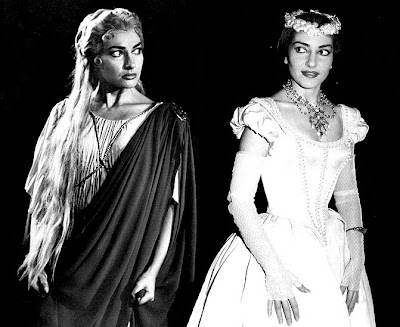
We open this article with a symbolic image: Maria Callas "mirror" depicted in two of his most important roles, or Amina and Norma, two characters traditionally considered to be poles apart but, in reality, are much more similar with respect to other roles that have traditionally been approached. In other words, Amina is closer to that standard to Lucia, as Amina is closer to standard than to Turandot. Their "distance" is the result of a misunderstanding generated at the beginning of the century, misunderstanding perlatro far from uncommon even today. Abstract: there is to say that, as already mentioned, at the time of Bellini's vocal classes did not exist we are used to today, so it's hard to think in terms of modern voice. Bellini was basically a soprano voice available, that would be quite substantial, at least in the case of Giuditta Pasta, the historic singer for which they were written Sonnambula and Norma, but even if (as we have seen less dramatic) of Merich-Lalande.

Pasta was before being a soprano, a contralto of success, then had a great bass extension and certainly a dark timber and round. But Divine Judith, as we learn from the chronicles, to be a contralto voice was judged as "clear" and a large extension at the top, so much so that even early career, she was already "soprano absolute", since it is known that well sang Don Giovanni as well as Otello, Semiramide, and Moses, all of Colbran roles. There were then two "characters" (let's call them) and two vocalists, a soprano "pathetic" and a soprano "tragic," embodied both by the same singer, who had an entry stamp from the middle, but not dark brown as that of a contralto, with great agility, but also a great breath control and legato. Traditionally Amina instead ended up in the soprano repertoire in the strict sense, which was typically not part of the French and Italian tradition, while standard in the strict sense of the dramatic soprano who, along with mezzo-soprano, born with a Verdi in practice.

Adalgisa in Norma
The same is often mistakenly assigned to a mezzo-soprano, to differentiate it from the hero, when in fact it is simply a soprano of the first kind with less writing from supporting actor "in sight". This is confirmed by the fact that in the first part was entrusted to Grisi, the less extensive and versatile voice from Pasta tends to be more of a lyrical agility, as today we would call (the same dichotomy "Pasta-gris" is found in between Bolena Donizetti and Seymour). Writing it never drops very low so much so that both the Caballè the brakes (both lyric sopranos with very serious thin) were able to sing the part. Norm rather has been, throughout the first half of the century until the advent of Callas, workhorse of dramatic sopranos of force, with the bel canto that had little to do (the Milanov and Cigna even further - in the picture -, that was in the first half of the century, Norma and Turandot by definition), while in between 800 and 900 were still the great dramatic sopranos like Ester Mazzoleni and Lilli Lehmann, recent phenomena voice of an old school, singing the dramatic repertoire with the technique Belcanto (the first with a repertoire that ranged from Medea to Lucrezia Borgia, the last - the much-quoted Callas - Mozart had in his repertoire, Meyerbeer and Bellini though great Wagnerian soprano). Interesting then speculate how the misunderstanding, that is to replace a soprano pathos "protagonist" with a light soprano, in association with the angelic and fragile nature of the role (speaking of Dal Monte, the Carosio of Pagliughi to climb up to Tetrazzini) is extends deeper into the history of opera, to the Puritan Elvira, Gilda in Rigoletto, and even the Butterfly Puccini.

This process of divergence is exacerbated for the most part between the wars, as a result estremizzante realist aesthetics that seemed to have reached a point of no return. While the light soprano, had already "invaded" the Italian repertoire from the 800's in the 20's there was someone like Muzio Ponselle or - in the picture - the same muse Callas, which boasted an authentic voice backed by dramatic superior technique, albeit in a repertoire that is limited to the roles of the soprano "tragic"; if it is true that Ponselle was superb standard, never the diva would face Amina stylistically considered incompatible with the allure of large Tragedienne her surroundings, as well as vocally too inaccessible (formerly Ponselle in Norma the "adjusted" is not much). There were exceptions, however, within a well-established tradition. The real incompatibility between the roles and voice that had been created, there will also strictly technical problems: Callas stressed that all these roles were "a terrible central", a middle register where the text insists that it should be smooth, light and both full and round sound. The result was that the dramatic soprano of strength and simplified terribly messy with the agility and was often in trouble with the related aircraft, the soprano, however, was hardly able to make credible the cantabile of the medium that will inevitably lose consistency and charm, in addition to being required to make more of an adjustment to the top steps to address the most serious stuff and the score, as was customary in their repertoire, by the sheer virtuosity of melisma exterior. Sonnambula and Norma, both so as to have the same voice being that of a paste, found themselves in time with two voices and equally inappropriate antithetical to the repertoire, which for years was not only historically misleading (grounds on which the average listener will omitted), but often product designs is obviously not up on the floor than on purely stylistic vocalist. It seems only right then, before you browse the interpreters of either role, make a speech to a party which parallel the most important singers who faced both roles, as was prescribed in 800. But first, five executions "emblematic" of Casta Diva of pre-callasiana:


Lilli Lehmann


Rosa Ponselle


Claudia Muzio


Toti Dal Monte


Gina Cigna